A tummy tuck can significantly improve abdominal contour after pregnancy, weight loss, or changes related to aging. For most patients, however, the biggest question is not the surgery itself, but the recovery.
At The Williams Center, Dr. Lloreda thoroughly prepares patients for what happens after abdominoplasty. While every patient heals at their own pace, recovery typically follows a structured, predictable pattern.
This guide outlines what most patients experience week by week, including:
- Swelling
- Posture changes
- Drain usage
- Compression garments
- Return to work
- Exercise milestones.
If you are researching tummy tuck recovery in the Albany area, this timeline will help you plan realistically.
Quick Answer: Tummy Tuck Recovery Timeline
Quick Summary:
Week 1
- Swelling, tightness, bruising
- Walking slightly bent at the waist
- Drains are commonly in place
- Compression garment worn continuously
- Short walks encouraged
Weeks 2–3
- Swelling improvement, but still visible
- Many return to desk work
- Standing more upright
- Light activity increases
Weeks 4–5
- Bruising largely resolved
- Swelling softens
- Daily routines feel easier
- Gradual increase in activity
Week 6+
- Light exercise may resume (if cleared)
- Continued decrease in swelling
- Contour becomes more defined
- Scar maturation continues for months
Now let’s break this down in detail.
What Determines Your Recovery Timeline?
No two recoveries are identical. Several factors influence healing:
1. Full vs. Mini Tummy Tuck
A full tummy tuck addresses skin and muscle above and below the navel. A mini tummy tuck typically focuses on the area below the navel and may involve less muscle tightening. Full procedures usually require a slightly longer recovery.
2. Muscle Repair (Diastasis Recti Correction)
When abdominal muscles are tightened, patients often feel significant tightness early on. This improves gradually as tissues relax during healing.
3. Liposuction Performed at the Same Time
Liposuction is commonly combined with abdominoplasty. When included, swelling can extend beyond the central abdomen and may take longer to resolve.
4. Smoking and Circulation
Nicotine reduces blood flow and can delay healing. Patients who avoid nicotine before and after surgery tend to heal more predictably.
5. Overall Health and Activity Level
General health, nutrition, and compliance with post-operative instructions significantly affect recovery speed.
Week 1 After a Tummy Tuck
The first week is the most restrictive and requires preparation.
Swelling and Tightness
Swelling begins immediately after surgery. The abdomen often feels firm, stretched, and tight, especially if muscle repair was performed.
This tight sensation is expected and does not mean something is wrong.
Posture Changes
Many patients walk slightly bent at the waist during the first several days. This reduces tension on the incision and muscle repair. Standing fully upright usually becomes easier in weeks two and three.
Drains
Drains are commonly placed to remove excess fluid. These are typically removed within one to two weeks, depending on output levels.
Compression Garment
A compression garment is worn continuously during early recovery. Its purpose is to:
- Support healing tissues
- Minimize swelling
- Improve comfort
Walking and Circulation
Short, frequent walks are encouraged. Movement improves circulation and lowers the risk of blood clots.
Strenuous activity is avoided.
Sleep Position
Most patients sleep on their back with the upper body elevated and knees supported to reduce abdominal tension.
When to Call Dr. Lloreda
Contact the office promptly if you experience:
- Increasing redness or warmth
- Persistent fever
- Sudden severe swelling
- Worsening pain
- Shortness of breath
These are uncommon but require evaluation.
Weeks 2-3: Gradual Progress
Most patients begin to feel more independent during this phase.
Swelling
Swelling remains visible. It may fluctuate throughout the day. Increased activity or heat can temporarily increase swelling.
This is normal.
Returning to Work
Many patients return to desk-based jobs between 10 and 14 days. Jobs requiring lifting or prolonged standing require additional recovery time.
Mobility
Standing more upright becomes comfortable. Walking improves. Fatigue can still occur.
Garment Use
Compression garments are typically continued for several weeks. Dr. Lloreda adjusts duration based on healing.
Weeks 4-5: Noticeable Improvement
Around one month post-surgery, improvements become clearer.
Bruising
Bruising is usually resolved.
Swelling Softens
The abdomen begins to feel less firm. While swelling is still present, the abdominal contour becomes more apparent.
Energy Levels
Most patients feel more normal in daily routines.
Scar Development
Incisions may appear pink or firm. This is a normal stage of scar maturation. Scar improvement continues for many months.
Week 6 and Beyond: Returning to Activity
At approximately six weeks, many patients are cleared for gradual return to exercise.
Exercise
Light cardio and controlled core activity may resume with clearance. High-impact exercise is reintroduced gradually.
Swelling Timeline
Significant swelling improves by two to three months. Mild residual swelling can persist longer
Sensation Changes
Temporary numbness along the lower abdomen is common. Sensation often improves gradually over months.
Frequently Asked Questions
How long does tummy tuck swelling last?
Most noticeable swelling occurs during the first month. Major improvement is typically seen within two to three months. Mild swelling may persist for several months.
When can I drive?
Driving is usually permitted once you are no longer taking narcotic pain medication and can move comfortably, often around two weeks.
When can I exercise?
Walking begins early. Structured exercise is often resumed around six weeks with surgical clearance.
How long do I wear compression garments?
Most patients wear garments for four to six weeks, depending on healing progress.
When can I stand fully upright?
Most patients stand upright comfortably by the end of week two.
Is numbness normal?
Temporary numbness in the lower abdomen is common and often improves over time.
What Helps Recovery Go Smoothly?
The most effective recovery strategy is simple:
- Follow instructions carefully
- Wear garments consistently
- Walk regularly but avoid strain
- Avoid nicotine
- Keep follow-up appointments
- Be patient
Healing is progressive, not immediate.
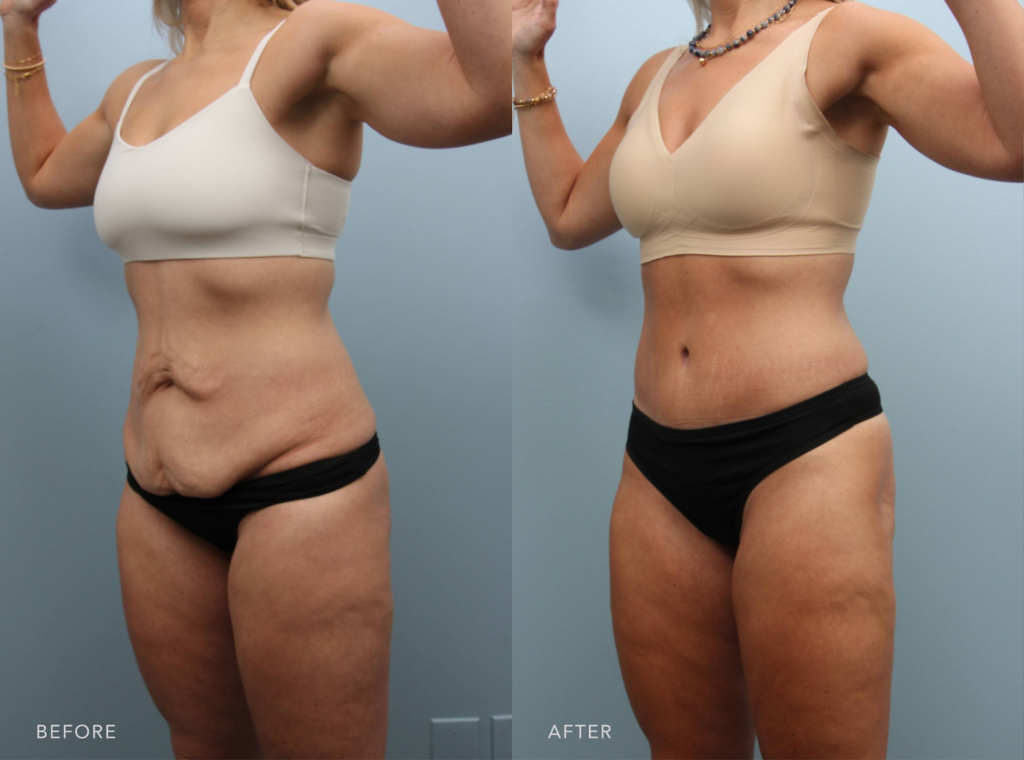
Planning Your Tummy Tuck in Albany or Latham
At The Williams Center, Dr. Lloreda tailors each surgical plan to the individual. During consultation, recovery timelines are discussed in detail to help patients plan appropriately.
Understanding recovery before surgery allows you to prepare for time off work, childcare, and activity restrictions.
If you are considering a tummy tuck in the Albany area, we invite you to schedule a consultation to discuss your goals and recovery expectations.