Introduction
Over the past decade, “thread lifts” have exploded in popularity. Marketed as a minimally invasive alternative to facelift surgery, they promise quick results with little downtime. Sometimes called “lunchtime lifts,” these procedures use barbed sutures to pull sagging skin upward. For patients hoping to refresh their look without surgery, the pitch sounds almost too good to be true.
And in many cases, it is.
At The Williams Center, Dr. Edwin Williams — a double-board-certified facial plastic surgeon and nationally recognized expert in facelifts — has seen the long-term reality of thread lifts.
Many of his patients come in frustrated after undergoing one, two, or even three thread lift procedures, only to see minimal improvement and results that quickly fade. Some arrive with complications that require surgical correction.
In this blog, we’ll break down why thread lifts raise red flags, what the research says, and why a deep plane facelift offers a safer, longer-lasting, and more natural solution.
What Is a Thread Lift?
A thread lift is a minimally invasive cosmetic procedure where temporary barbed sutures are inserted under the skin to pull tissues upward.
- Procedure setting: typically performed in an office, often under local anesthesia.
- Downtime: usually less than a week.
- Appeal: quick, lower upfront cost compared to surgery, and often marketed as a “nonsurgical facelift.”
At first glance, this may sound ideal for someone with early signs of aging. But the deeper truth is far more complex.
Why Patients Choose Thread Lifts
- Minimal Downtime – Many patients return to work within days.
- Lower Upfront Cost – Commonly ranges $1,200–$2,500+ in the U.S., versus significantly higher fees for surgical facelift.
- Fear of Surgery – For those hesitant about anesthesia or longer recovery, thread lifts feel less intimidating.
- Social Media Hype – Influencers and celebrity endorsements make thread lifts seem like a modern, low-risk shortcut to youth.
Unfortunately, this popularity often overshadows the very real limitations and risks.
The Reality: Why Thread Lifts Often Disappoint
Dr. Williams has been sounding the alarm for years. In his words:
“Red flag, red flag, red flag on the thread lift. It makes no sense to me how you can simply pull tissue with barbed suture and hold it in place without releasing, repositioning, and resuturing. I’ve seen patients with three thread lift procedures and still no results.”
Here are the biggest problems patients should understand:
1. Short-Lived Results
Thread lifts only reposition skin and superficial fat. They don’t address the deeper structures (SMAS and retaining ligaments) responsible for facial sagging. As a result, results usually last 1–3 years, compared to 10–15 years for a deep plane facelift.
2. Cumulative Costs
Since results fade, patients often repeat the procedure. After two or three thread lifts, many end up spending as much as they would on a facelift — without achieving the same transformation.
3. Unnatural Appearance
Because the lift relies on tension, it can create puckering, dimpling, or a “pulled” look. Skin may appear distorted rather than naturally refreshed.
4. Complications
Thread lifts carry risks such as:
- Infection
- Thread extrusion
- Visible or palpable sutures
- Dimpling/irregularity
- Swelling
- Paresthesia
While most complications are minor, they are not rare. Dr. Williams has removed threads for many patients, often finding scar tissue that complicates later surgery.
5. Not a True Surgical Lift
Threads may stimulate collagen and provide subtle, short-term tightening, but they do not cut, release, or reposition deeper structures. Without this foundation, results remain limited and temporary.
Dr. Williams’ Red Flag: What He Sees in Surgery
In a recent video, Dr. Williams shared footage of removing barbed sutures from a patient who had undergone three failed thread lifts. Each time, the provider told her, “it just didn’t take.” By the third attempt, she was disappointed, scared, and frustrated.
Watch Video Here:
View this post on Instagram
How a Deep Plane Facelift Is Different
The deep plane facelift is considered the gold standard in modern facial rejuvenation. Unlike traditional facelifts that primarily tighten skin, the deep plane method works on the deeper SMAS layer and retaining ligaments.
Benefits of a Deep Plane Facelift
- Long-Lasting Results – Commonly 10–15 years of rejuvenation.
- Natural Appearance – Restores youthful contours without the “pulled” or “windswept” look.
- Comprehensive Correction – Addresses jowls, deep nasolabial folds, sagging cheeks, and neck laxity.
- Less Skin Tension – Because the lift is structural, recovery is smoother and results are more harmonious.
Dr. Williams is a recognized authority in deep plane facelifts and has performed thousands of procedures over his 30+ year career. Patients travel from across the country for his expertise.
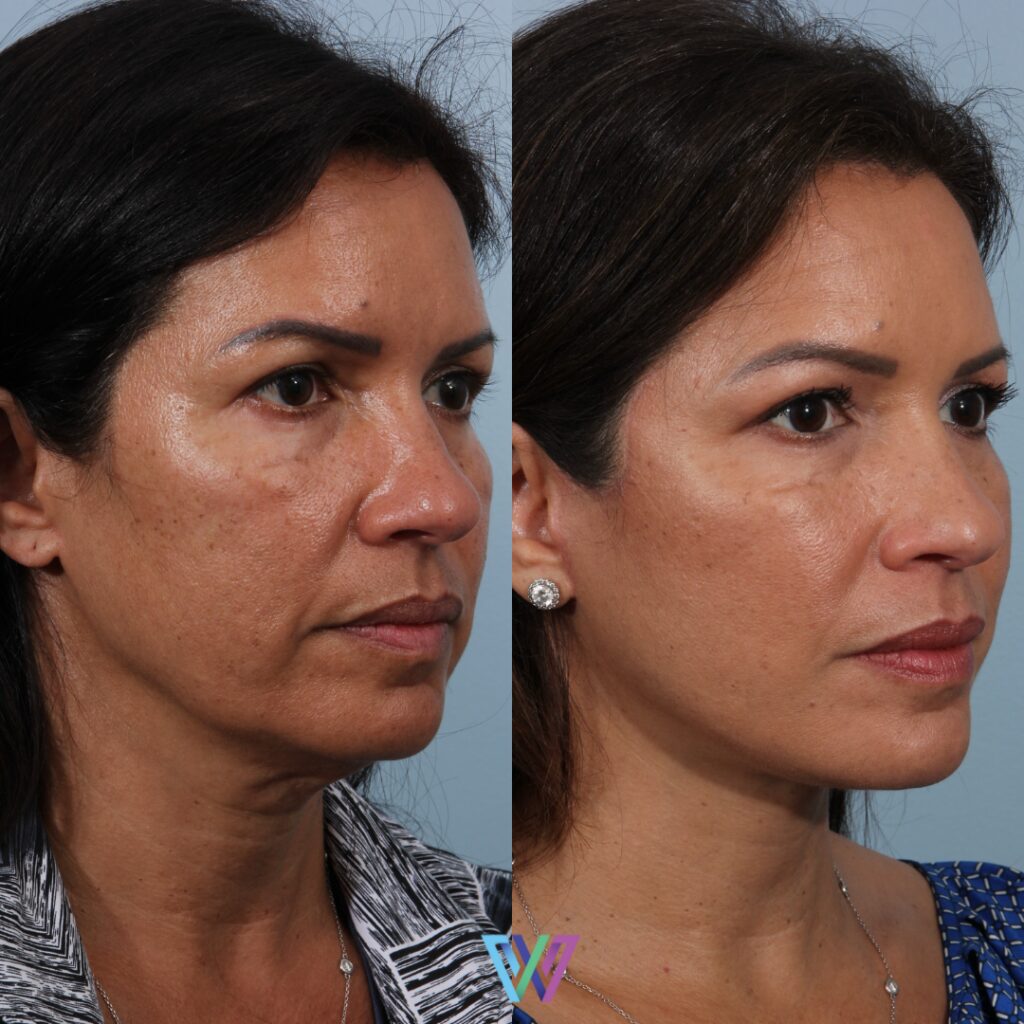
Before and After Photos of a Deep Plane Facelift
Still unsure if a Deep Plane Facelift is the right option?
Explore some before and after photos to help you decide.
Cost vs. Value: Thread Lift vs. Deep Plane Facelift
- Thread Lift: $1,200–$2,500+ per treatment, often repeated every 1–3 years. Over a decade, patients may spend up to $20,000+ with limited results.
- Deep Plane Facelift: Higher upfront investment (approximately $18,000–$40,000 here at The Williams Center), but results last much longer with fewer revisions, making it more cost-effective over time.
Can You Have a Facelift After a Thread Lift?
Yes, but with caution.
Threads often need removal during facelift surgery.
Scar tissue can make the procedure more complex.
A 2025 study found multiple prior thread lifts may cause fibrosis, tissue distortion, and reduced SMAS mobility, making surgery more difficult — though experienced surgeons can still achieve excellent results.
This is one of the reasons Dr. Williams advises avoiding thread lifts if you are even considering facelift surgery in the future.
Who Is (and Isn’t) a Candidate?
Thread lift may suit:
- Patients with very early laxity
- Those unwilling or unable to undergo surgery
- People who accept results will be subtle and short-lived (1–3 years)
Deep plane facelift may suit:
Patients with moderate to severe sagging
Those with jowls, neck laxity, or deep facial folds
People seeking a lasting, natural transformation (10–15 years)
Patient Perspective: From Thread Lift Failure to Facelift Success
One patient came to Dr. Williams after three unsuccessful thread lifts. After undergoing a deep plane facelift, she said:
“I wish I had done this years ago. I spent thousands on thread lifts that gave me nothing but frustration. The facelift gave me the real results I was looking for.”
Conclusion: Why Thread Lifts Aren’t Worth the Risk
Thread lifts may sound appealing, but the reality rarely matches the promise. Short-lived results, repeat costs, unnatural tension, and potential complications make them a poor substitute for true facial rejuvenation.
For patients ready for real, lasting change, the deep plane facelift remains the gold standard. With Dr. Williams’ experience and artistry, patients achieve youthful, natural-looking results that last for years — not months.
Considering facial rejuvenation? Schedule a consultation with Dr. Edwin Williams at The Williams Center for Facial Plastic Surgery to explore your best options for lasting, natural beauty.
About the Author: Dr. Edwin Williams

Dr. Edwin Williams is a double board-certified facial plastic surgeon who founded The Williams Center in 1993. He has performed over 10,000 facial plastic surgery procedures and has pioneered the deep plane facelift. He served on the Board of Directors for the American Academy of Facial Plastic Surgery for over a decade, and served as President from 2015-2016. In 2016, 2017, 2018 and 2019, Dr. Williams earned the Castle Connelly Top Doctors award in New York Facial Plastic Surgery.
Dr. Edwin F. Williams III attended Cornell University in Ithaca, New York where he received a Bachelor of Science degree in 1982. He began medical school at the State University of Buffalo School of Medicine and received his Doctor of Medicine in 1986.
Dr. Williams is actively involved in teaching facial plastic and reconstruction surgery to the residents of the Albany Medical Center and is former Chief of the Section of Facial and Plastic Reconstruction Surgery at Albany Medical Center where he received an academic appointment of Clinical Professor, Department of Surgery.