Table of Contents
- What Areas Does a Deep Plane Facelift Treat?
- Deep Plane Facelift Cost at The Williams Center
- How Is a Deep Plane Facelift Performed?
- Recovery After Deep Plane Facelift Surgery
- Deep Plane Facelift vs. Traditional SMAS Facelift
- Are Deep Plane Facelift Scars Visible?
- How Long Do Deep Plane Facelift Results Last?
- How to Find an Experienced Deep Plane Facelift Surgeon
- Frequently Asked Questions About Deep Plane Facelift Surgery
A deep plane facelift is a facial surgery technique that repositions deeper facial tissues beneath the SMAS, or superficial musculoaponeurotic system. By releasing and repositioning these deeper tissues, the procedure can address age-related changes in the cheeks, jawline and neck without relying primarily on tension placed on the skin.
The technique can restore descended cheek tissue, improve jowls and jawline definition, and address changes through the lower face and neck.
A true deep plane facelift is very technically challenging, which is why many surgeons do not perform the procedure. Dr. Edwin Williams has created a specific approach to the deep plane facelift, which he has perfected over the years and has shared with other surgeons in the United States and internationally.
What Areas Does a Deep Plane Facelift Treat?
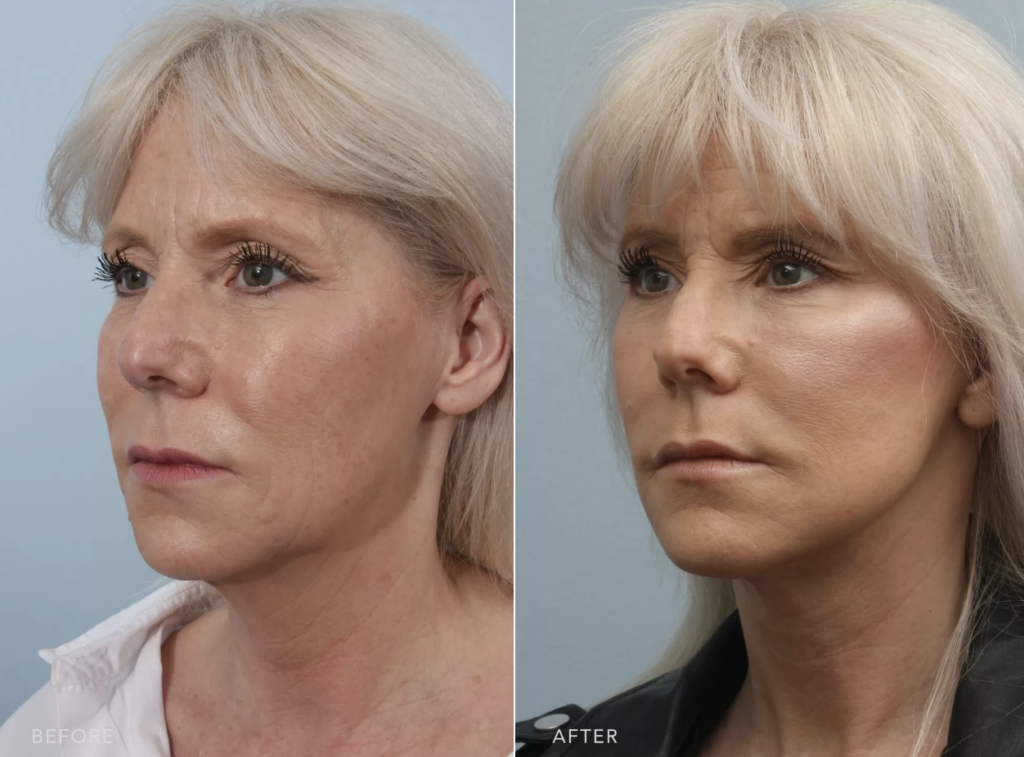
The jowls, excess neck skin, and midface soft tissues are areas that see the most improvement after a deep plane facelift. When patients undergo deep plane facelifts, they also see improvements in their lower eyelids. These deep plane facelift results leave patients looking, on average, 12-15 years younger.
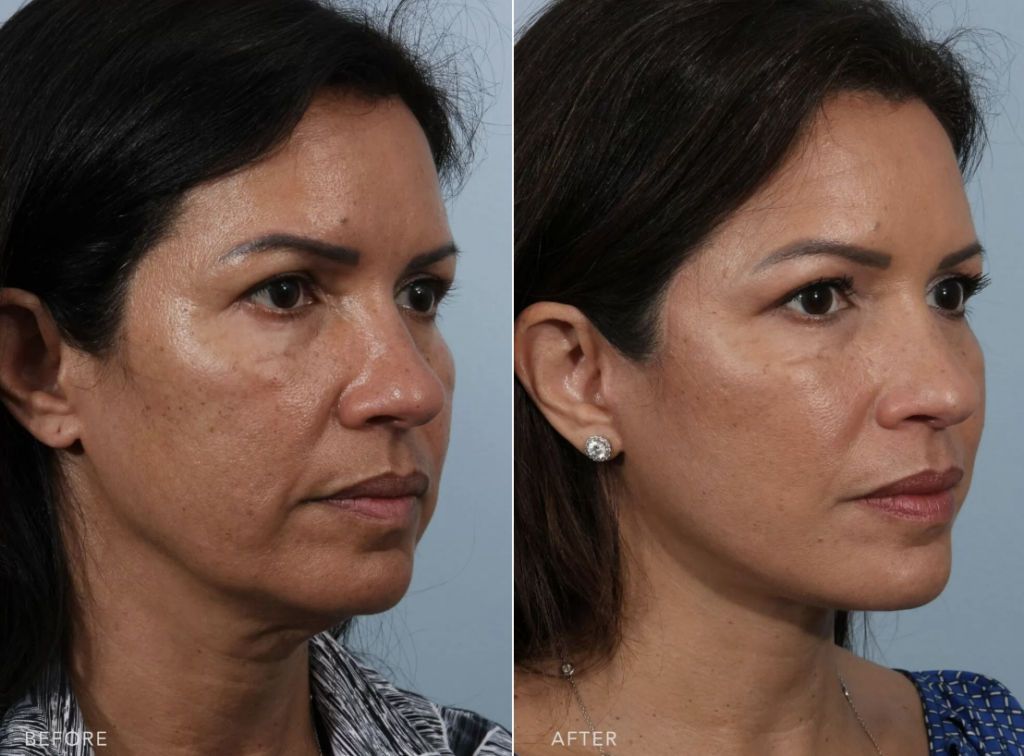
How Is a Deep Plane Facelift Performed?
The deep plane facelift is most commonly performed under general anesthesia. This means that our patients are put “to sleep” by our experienced anesthesia team.
The procedure involves dissecting multiple layers of tissues in the face as well as the neck.
The first step of the surgery is to make an incision in the face and neck, typically within the hairline and skin crease just in front of the ear. This incision is designed to “hide” or minimize facial scars. The facial and neck skin is then separated from deeper tissues, allowing your surgeon to visualize the superficial musculoaponeurotic system (SMAS).
The SMAS is a tissue layer made up of elastin, collagen, and fat cells that normally drapes over our facial muscles and facial organs. The SMAS extends from the neck to the forehead, and it is this structure that gets “lifted” in a deep plane facelift.
Once the SMAS is identified, your surgeon will then work on separating the SMAS from deeper tissues. The region underneath the SMAS is referred to as the deep plane. The SMAS layer is carefully lifted up, and multiple stitches are placed to anchor the SMAS in different regions of the face and neck. Suturing the SMAS allows us to directly pull on common areas of aging, such as sagging of the cheek, jowls, and sagging of the neck.
An important part of the deep plane approach is releasing specific retaining ligaments that tether the deeper facial tissues. This creates the mobility needed to reposition those tissues rather than relying primarily on tightening the skin.
At the end of the surgery, your surgeon will perform meticulous suturing to close all the incisions.
Deep Plane Facelift Cost at The Williams Center
The cost of a deep plane facelift varies based on the extent of surgery, anesthesia, facility fees and whether additional procedures are performed at the same time.
For current Williams Center pricing and a complete breakdown of surgeon, anesthesia and facility fees, read our Deep Plane Facelift Cost Guide.
At The Williams Center can expect to pay approximately in the range of $28,500 to $42,000 for their deep plane facelift surgery.
Recovery after deep plane facelift surgery
Recovering after a deep plane facelift surgery can take seven to 14 days, depending on the procedure.
Most patients do not complain of discomfort during recovery, but often describe it as being sore or having a tightness in their face.
Recovery varies based on the extent of surgery and any additional procedures performed. For the full postoperative timeline, activity guidance, incision care and return-to-work information, see our Deep Plane Facelift Recovery Guide.
Watch to see a patient’s day by day recovery after a deep plane facelift surgery.
Deep Plane Facelift vs. Traditional SMAS Facelift
Originally, facelifts were performed by just lifting up the skin and pulling it tight; this resulted in an unnatural “windblown” look. The technique then evolved to what many people around the country currently use: the imbrication technique.
The imbrication technique is when the skin is lifted, and the SMAS layer (or superficial musculoaponeurotic system) is cut into and pulled tight. The problem with the imbrication technique is that there are ligaments (or areas of attachment) that cannot be smoothed out by just pulling that tissue.
A true deep plane facelift, then, is taking this one step further. We not only make an incision in that deeper SMAS layer, but we also dissect underneath that layer to free up those ligaments.
This dissection improves the neck and results in a nice, crisp jawline.
How Does a Deep Plane Facelift Differ From Less-Invasive Facelift Techniques?
Because deep tissues are pulled up during a deep plane facelift, there will be greater definition to the cheekbones, jawline, and neck.
Patients tend to look more natural rather than a “pulled” look. The deep plane facelift can also restore volume to the mid-face and under-eye areas to give patients fuller cheeks and a more youthful appearance.
Some experts also argue that the results of a deep plane facelift lasts longer than many of the other traditional facelift techniques.
Want to explore a less invasive variation? Learn more about the Preservation Deep Plane Facelift and how it compares.
Are Deep Plane Facelift Scars Visible?
At The Williams Center, our expert plastic surgeons create the incision so that hair can grow through it — meaning that months later, the facelift incision scars are not visible. Instead, the incisions are hidden around the ears and within the hairline.
When we see our patients one year after they undergo facelift surgery, the incisions are virtually undetectable.
How Long Do Deep Plane Facelift Results Last?
Many experts believe that the results of a deep plane facelift should last anywhere between 7 to 12 years.
Individual factors, such as genetics, cumulative sun damage, and skin quality, all play a role in aging and can affect the longevity of surgery. We recommend practicing a good anti-aging skincare regimen after surgery to ensure that the effect of a facelift lasts as long as possible.
Typically, the most noticeable areas of improvement after a deep plane facelift are the cheekbones and jawline. However, an individual who has undergone a deep plane facelift will continue to experience aging even after surgery. As time goes on, some people may notice the sagging of the skin on their face and neck.
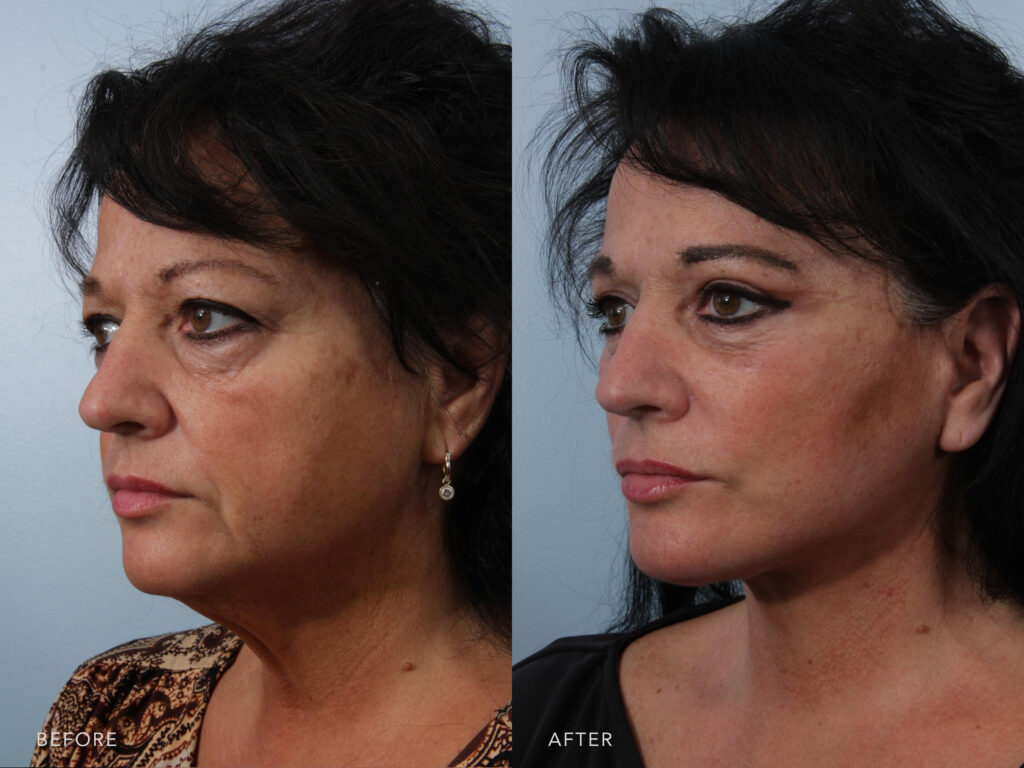
Patient showcasing their results after undergoing an extended deep plane facelift at The Williams Center.
How to find an experienced deep plane facelift surgeon
It’s important to find a surgeon who is experienced in the procedure you’re looking to have, has all relevant certifications, and comes highly recommended by previous patients.
Because deep plane facelift techniques can vary between surgeons, patients may want to ask specifically about training, experience, surgical approach and how often the surgeon performs the procedure.
For Dr. Williams’ complete list of questions to ask during your research, read How to Select the Right Surgeon for Your Deep Plane Facelift
Schedule a deep plane facelift consultation.
Dr. Edwin Williams has spent many years perfecting his deep plane facelift technique and has shared it with other surgeons in the United States and internationally.
If you’re considering surgery, visit our Deep Plane Facelift procedure page to learn more about candidacy, before-and-after results, consultation, surgery and treatment at The Williams Center.
If you’re ready to discuss your concerns with Dr. Williams, schedule a consultation today.
Frequently Asked Questions About Deep Plane Facelift Surgery
What is a deep plane facelift?
A deep plane facelift is a surgical technique that works beneath the SMAS layer and releases deeper facial attachments so the underlying soft tissues can be repositioned.
What does SMAS mean in facelift surgery?
SMAS stands for superficial musculoaponeurotic system. It is a layer of connective tissue beneath the skin that plays an important role in facial support and movement.
How is a deep plane facelift different from a traditional facelift?
The deep plane approach involves working beneath the SMAS and releasing specific retaining ligaments. Other facelift techniques may tighten or reposition the SMAS differently without the same degree of deep-plane dissection.
Does a deep plane facelift treat the neck too?
A deep plane facelift can improve areas of the lower face and neck, but the exact surgical plan depends on the patient’s anatomy and the degree of facial and neck aging.
Keep these concise.
About the Author: Dr. Edwin Williams

Dr. Edwin Williams is a double board-certified facial plastic surgeon who founded The Williams Center in 1993. He has performed over 10,000 facial plastic surgery procedures and has pioneered the deep plane facelift. He served on the Board of Directors for the American Academy of Facial Plastic Surgery for over a decade, and served as President from 2015-2016. In 2016, 2017, 2018 and 2019, Dr. Williams earned the Castle Connelly Top Doctors award in New York Facial Plastic Surgery.
Dr. Edwin F. Williams III attended Cornell University in Ithaca, New York where he received a Bachelor of Science degree in 1982. He began medical school at the State University of Buffalo School of Medicine and received his Doctor of Medicine in 1986.
Dr. Williams is actively involved in teaching facial plastic and reconstruction surgery to the residents of the Albany Medical Center and is former Chief of the Section of Facial and Plastic Reconstruction Surgery at Albany Medical Center where he received an academic appointment of Clinical Professor, Department of Surgery.